
Wine Cabinets and Professional Wine Storage
How They Work Together
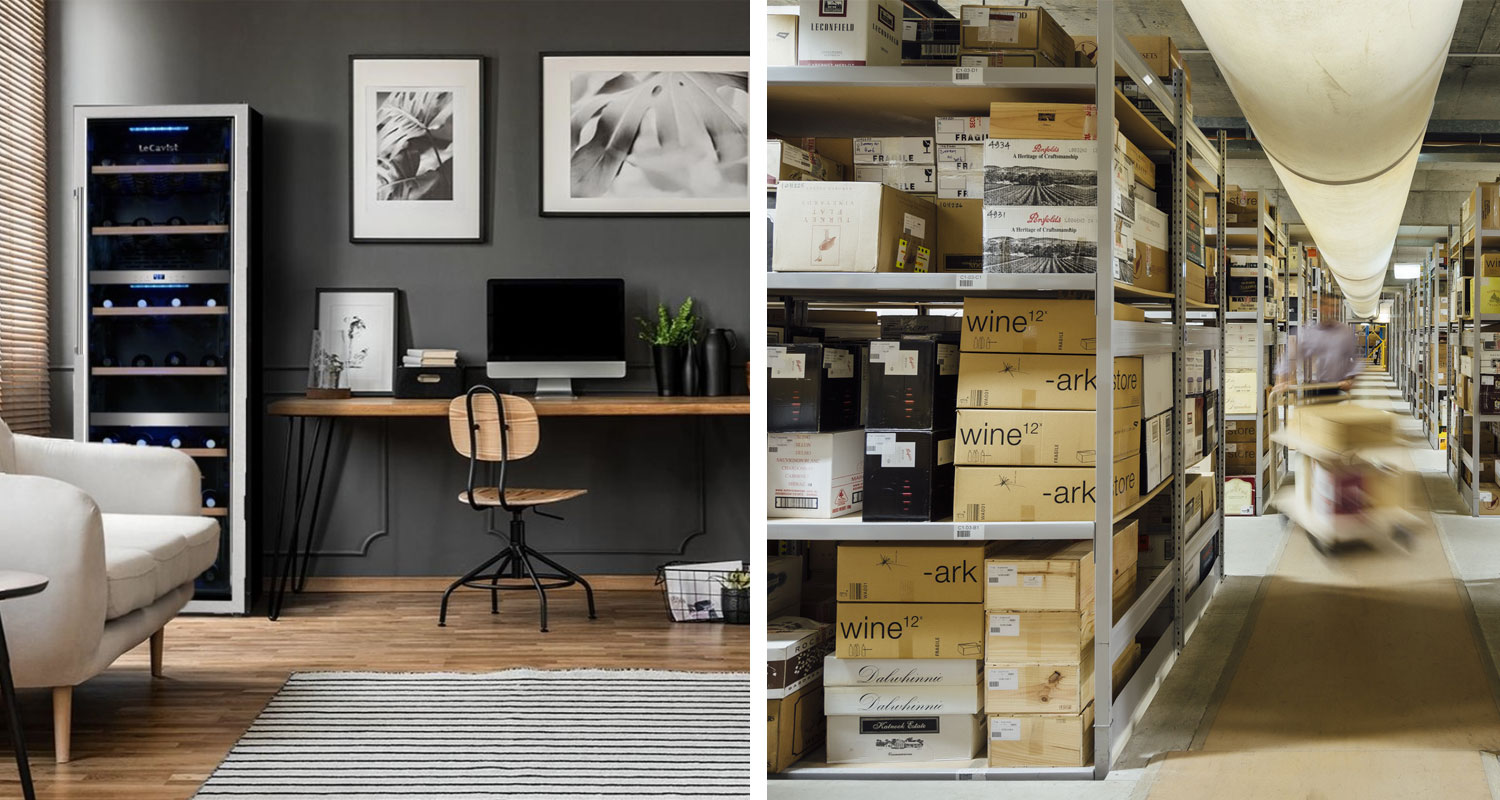
Wine is not static. From the moment a bottle is purchased and is placed into a wine cabinet for storage, it begins a slow evolution that can either reward patience or punish neglect. How and where it is stored determines whether that evolution leads to complexity, balance, and pleasure, or disappointment.
For many wine owners, storage decisions happen reactively rather than deliberately. A few bottles go into a cupboard. A case lands in the garage. A wine fridge appears once space runs out. Over time, collections grow, homes change, and suddenly the original plan no longer fits.
The most successful collectors think about wine storage as a journey, not a single solution. From acquisition to professional wine storage, to the final mile at home, each stage plays a role in protecting both the wine and its provenance.
This article walks through that journey step by step, showing how offsite wine storage and wine cabinets work together to preserve wine properly from day one through to the moment it is opened.
Stage 1: Preparing for new acquisitions
Wine enters a collection in many ways: purchased from retailers, wineries, and auctions; gifted or inherited. Regardless of how it arrives, one fact remains constant. Most wines that are worth keeping are not meant to be consumed immediately.
Short-term storage at home is often unintentional. Bottles are placed where space allows rather than where conditions are ideal. Temperature fluctuations, light exposure, and vibration begin affecting the wine long before any visible signs appear.
For wines intended to be enjoyed within weeks or months, this may not matter. For anything kept longer, the first storage decision sets the tone for everything that follows.
Stage 2: Prioritise wine storage cabinets for labels ready to drink
For many households, a wine cabinet is the first intentional step toward proper storage.
A purpose-built wine storage cabinet provides a stable temperature, controlled humidity, protection from light, and minimal vibration. This creates an environment far closer to a traditional cellar than most areas of a modern home.
Wine cabinets are particularly well-suited to:
- Wines intended for near to medium-term drinking
- Apartment living where cellars are not possible
- Downsizers who want quality storage without dedicating a room
- Display and access without sacrificing care
- Maintaining a wine’s provenance when bottles move out of professional storage and into the home.
At this stage, the cabinet works well. But collections rarely stay static.
Stage 3: When collections grow, and space runs out
Most collectors underestimate just how quickly wine accumulates, and before long, your favourite labels jump between various wine cabinets and other storage options. A few cases become a few dozen. Allocations arrive annually. Bottles meant for future milestones quietly stack up … or get drunk too early!
Space becomes the limiting factor long before enthusiasm does.
At this point, wine owners often face a compromise. Either overcrowd the cabinet, move wine into unsuitable parts of the home, look beyond the house entirely… or heaven forbid, not purchase any more wine!
This is where off-site storage enters the journey.
Stage 4: Establishing provenance with offsite wine storage
Professional wine storage is designed to do one thing exceptionally well. Maintain absolute stability over long periods of time with uncompromised security.
Facilities like Wine Ark operate climate-controlled environments where temperature, humidity, airflow, light, and vibration are tightly managed. Wine is stored in conditions that mirror the world’s great traditional cellars, without the variability of residential living.
Off-site wine storage becomes essential when:
- Wine is intended to age for many years
- Collections exceed available home space
- Homes are renovated or sold
- Security and insurance become priorities
- Owners want to avoid premature opening
- Opportunity to sell your stored wines
Beyond preservation, off-site storage establishes something just as important: provenance.
Why provenance matters more than most people realise
Provenance is the documented history of how a wine has been stored and handled over time. It is built quietly and steadily through consistency.
Stable temperature. Minimal handling. Controlled environments. Clear chain of custody.
Once broken, provenance cannot be recreated. A wine that spends years in ideal storage can lose its integrity in a surprisingly short period if conditions change. This matters not only for resale value, but for drinking pleasure. Wines with intact provenance show better balance, freshness, and longevity when opened.
Professional wine storage lays the foundation; what happens next determines whether that foundation holds.
Stage 5: Bringing wine home without breaking the chain
Eventually, wine leaves off-site storage. It may be selected for an upcoming dinner, a celebration, or simply because it is reaching its ideal drinking window. This transition is the most overlooked stage of the storage journey.
Taking wine home does not mean its storage story ends. The final environment matters just as much as the first.
A properly specified wine cabinet becomes the last mile in the wine’s journey. It allows bottles to move from professional storage into the home without undoing years of careful ageing.
High-quality cabinets such as those produced by LeCavist are engineered to replicate cellar conditions at a domestic scale. Stable temperature zones, controlled humidity, vibration isolation, and UV protection ensure continuity of care. The result is simple but powerful. Wine leaves professional storage and arrives home without a reset in its storage history.
Stage 6: When your wine and storage cabinets reach their tipping point
Over time, even the best cabinets fill. New purchases arrive. Mature wines remain undisturbed. The balance shifts again. At this point, the storage journey loops naturally back to off-site storage. This is not a failure of the cabinet. It is proof that wine storage works best as a layered system.
Off-site storage provides long-term protection and scale. Wine cabinets provide access, visibility, and the final mile at home. Together, they form a continuous chain rather than competing solutions.
A smarter way to think about wine storage
The best wine storage decisions are rarely about choosing one option over another. They are about using the right solution at the right time.
Wine storage is a lifecycle.
- Acquisition sets intent
- Early home storage provides accessibility
- Off-site storage protects long-term ageing and provenance
- Wine cabinets preserve continuity at home
- Growth naturally returns wine to professional care
When these stages are connected thoughtfully, wine retains not only its quality, but its story. Because great wine is not just about where it ends up. It is about how well its journey has been protected along the way.
That’s where Wine Ark comes in. Our unique platform gives you instant visibility into every label in your collection, enabling effortless control. Your customer portal allows you to remotely organise your bottles for collection at your closest Wine Ark facility, delivery to your door or move it for sale in the Marketplace. With a bird’s eye view of your collection, you can nurture your labels for ageing or bring them home to enjoy at their peak drinking window.